
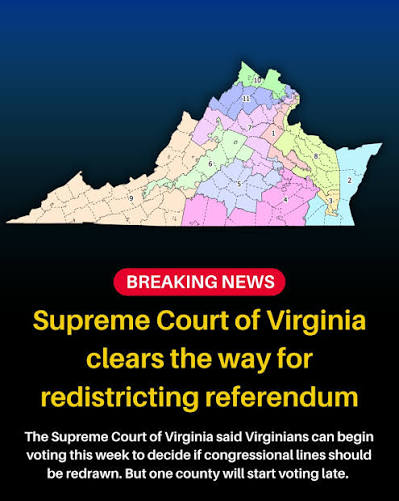

You probably have not heard of this case yet. But it could change your congressional district before the next election even happens. The Supreme Court is reviewing whether states must draw maps without using race as a factor in the process. Louisiana’s map sits at the centre of this case, but the outcome will not stay confined to Louisiana.
Here is why this matters to you directly.
- If the court rules broadly, many state maps could get thrown out entirely.
- New maps mean new district lines drawn from scratch.
- New lines can flip who represents you in Congress, sometimes without you even moving.
States drew their current maps this year expecting a certain political outcome. Republican-leaning states drew lines to protect Republican seats. Democrat-leaning states did the same for their own party. A single ruling could erase months of careful map drawing overnight.
Think about your own representative for a moment. Would a new map still include your neighbourhood in their district? Would you end up grouped with a different set of voters entirely, changing the kind of candidate who could actually win there? This is not a hypothetical exercise. It has happened before in other redistricting cycles, and courts have forced states to redraw maps mid-decade when a ruling demanded it.
Here is what makes this case different. Previous rulings often focused on individual states or specific districts. This case could set a standard that applies far more broadly, affecting how every state handles race in its redistricting process going forward. That is a much bigger shift than a single map correction.
Ask yourself this question. If the rules for drawing districts change nationally, how many House seats could flip simply because of new boundaries, without a single voter changing their mind? This case will not make headlines like an election night broadcast does. There will be no exit polls, no victory speeches, and no concession calls. But it may decide more House seats than any single individual campaign this year.
Here is how you can stay ahead of it.
- Follow reporting specifically on the Supreme Court’s redistricting docket, not just general political news.
- Check if your own state’s map is likely to be affected based on how it was drawn.
- Pay attention to the timeline. A ruling that comes late in the cycle could force rushed redraws right before an election.
Most political coverage focuses on candidates and campaigns. Maps get far less attention, even though they often decide outcomes before campaigns even begin. If you care about whether your vote reflects your community’s actual preferences, this case deserves your attention more than most campaign ads you will see this year.
A ruling here will not appear as a headline you scroll past once. It will shape the district you live in for years to come. Follow the ruling closely. It affects your vote more directly than most of what dominates the news cycle right now. Your representation depends on lines drawn on a map. Right now, those lines are more uncertain than they have been in years.